
Mathematicians and physicists have created many theories of gravity. However, none of these theories is technological, as they do not offer a method for endowing bodies with gravity or, in other words, a constructive definition of gravity. There is no model that explicitly states the claims of these theories. Furthermore, in the scientific context, "Technology is not just a codified knowledge of technofacts and their creation, but a form of our activity that does not depend on location, time, or the individual." The magnitude of the gravitational force between material bodies, according to Newton's law of universal gravitation, does not depend on their physical and chemical properties, their motion relative to each other, or the properties of the medium in which they are placed. In other words, the law of universal gravitation is not related to the universe.
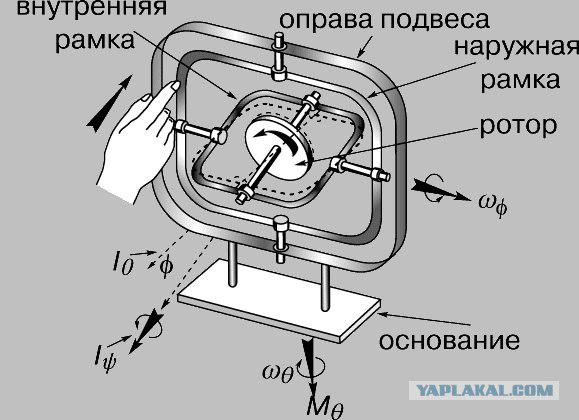
In this book, the author, guided by Isaac Newton's belief that nature is extremely simple and economical, and that if it has endowed bodies with anything during their creation, it is only the force of inertia, considers inertia as the fundamental principle of gravity. Thanks to an approach based on such an attitude, the phenomenon of gravity has been categorized under the category of inertia, the legitimacy of its membership in this category has been shown, the law of universal gravitation and the other three laws of Newton have been reduced to one law – the law of inertia, formulated and justified long before Newton by Galileo Galilei. This made it possible, based on the fundamental principle of operation known since Euler's time as conservation of angular momentum, to give a constructive definition of gravity.
Mathematicians and physicists have created many theories of gravity. However, none of these theories is technological, as they do not offer a method for endowing bodies with gravity or, in other words, a constructive definition of gravity. There is no model that explicitly states the claims of these theories. Furthermore, in the scientific context, "Technology is not just a codified knowledge of technofacts and their creation, but a form of our activity that does not depend on location, time, or the individual." The magnitude of the gravitational force between material bodies, according to Newton's law of universal gravitation, does not depend on their physical and chemical properties, their motion relative to each other, or the properties of the medium in which they are placed. In other words, the law of universal gravitation is not related to the universe.
In this book, the author, guided by Isaac Newton's belief that nature is extremely simple and economical, and that if it has endowed bodies with anything during their creation, it is only the force of inertia, considers inertia as the fundamental principle of gravity. Thanks to an approach based on such an attitude, the phenomenon of gravity has been categorized under the category of inertia, the legitimacy of its membership in this category has been shown, the law of universal gravitation and the other three laws of Newton have been reduced to one law – the law of inertia, formulated and justified long before Newton by Galileo Galilei. This made it possible, based on the fundamental principle of operation known since Euler's time as conservation of angular momentum, to give a constructive definition of gravity.
1. Duhem P. Physical Theory and Metaphysical Explanation //
Metaphysics. 2016. No. 2. P.187.
2. Newton I. Mathematical Principles of Natural Philosophy. M.:
Science, 1989.
3. Euler L. Fundamentals of Point Dynamics. M.-L.: ONTI, 1938. P.116.
4. Paul R.V. Mechanics, Acoustics and the Theory of Heat. M.: State Publishing House of Technical and Theoretical Literature,
1957.
5. Popov B.M. Beyond Artificial Intelligence. Voronezh: Quarta, 2018. 132p. https://vixra.org/pdf/2011.0157v1.pdf
In this book, the author, guided by Isaac Newton's belief that nature is extremely simple and economical, and that if it has endowed bodies with anything during their creation, it is only the force of inertia, considers inertia as the fundamental principle of gravity. Thanks to an approach based on such an attitude, the phenomenon of gravity has been categorized under the category of inertia, the legitimacy of its membership in this category has been shown, the law of universal gravitation and the other three laws of Newton have been reduced to one law – the law of inertia, formulated and justified long before Newton by Galileo Galilei. This made it possible, based on the fundamental principle of operation known since Euler's time as conservation of angular momentum, to give a constructive definition of gravity.
Mathematicians and physicists have created many theories of gravity. But none of these theories are technological, they don't offer a technology for endowing bodies with gravity. And now there is!
Experimental physicists and students studying theoretical physics





| Author(s) | Popov Boris Mikhailovich |
| Permanent link to this publication: https://libmonster.com/m/book/view/Technology-and-metaphysics-of-gravity © libmonster.com |
|
Empty
|
New Books: |
Popular Books: |
Editor's Choice (Worldwide): |
 |
Editorial Contacts |
About · News · For Advertisers |
 U.S. Digital Library ® All rights reserved. U.S. Digital Library ® All rights reserved.
2014-2026, LIBMONSTER.COM is a part of Libmonster, international library network (open map) Keeping the heritage of the United States of America |


|

 US-Great Britain
 Sweden
 Serbia
 Russia
 Belarus
 Ukraine
 Kazakhstan
 Moldova
 Tajikistan
 Estonia
Russia-2
Belarus-2
Estonia
Russia-2
Belarus-2


